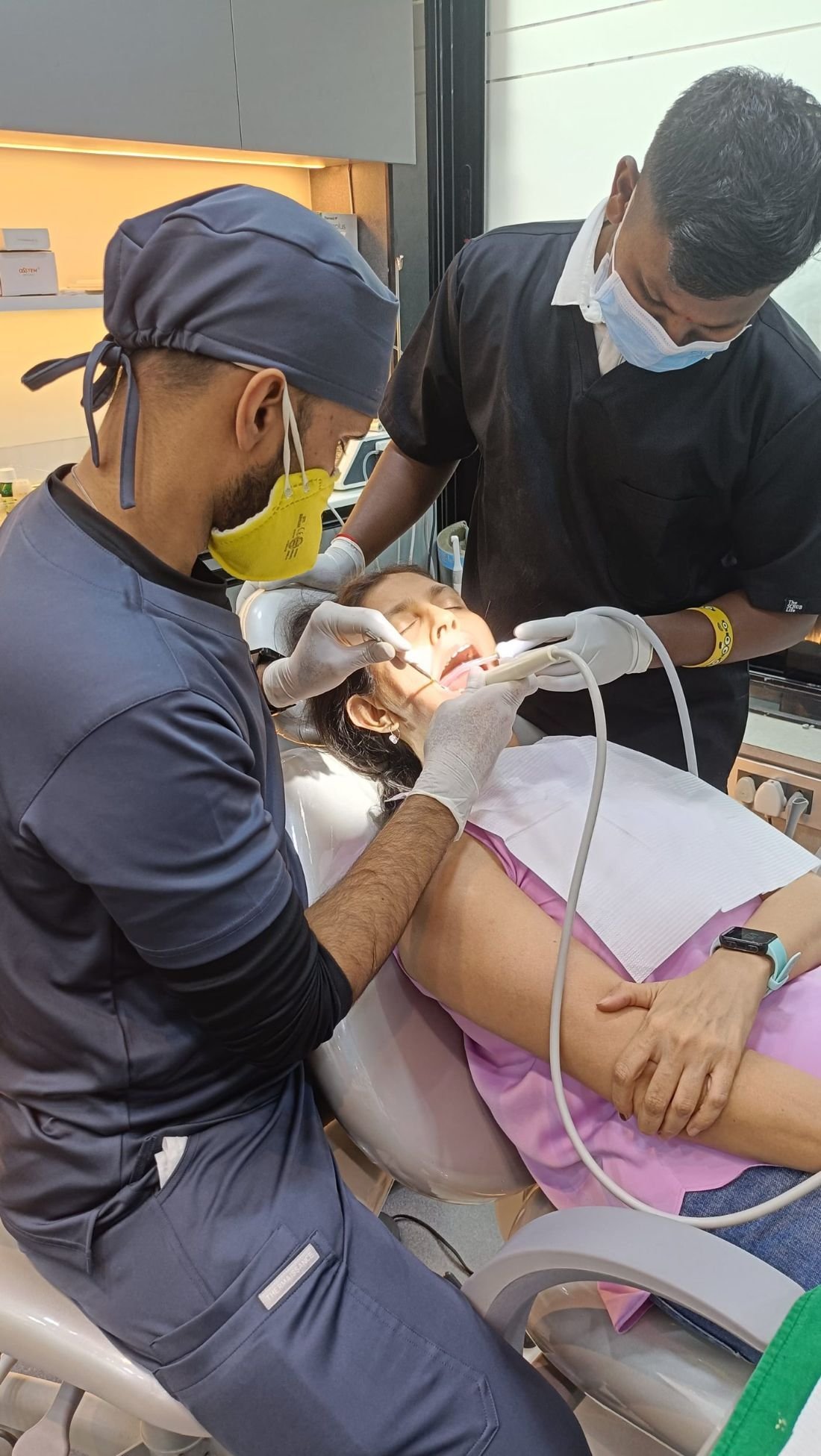
You may have seen a GP, an ENT or a physiotherapist. The scans came back clear, and the pain is still there every morning. Jaw joint and bite problems are often missed because they sit between specialties. Here is what to look for and what can be done.
Common signs
- Clicking, popping or grating when you open or chew
- A jaw that locks, or will not open fully
- A tired or aching jaw when you wake up
- Headaches, especially at the temples, with no clear cause
- Earache or a feeling of fullness in the ear with nothing wrong in the ear
- Worn, chipped or flattened teeth
- Someone telling you that you grind your teeth at night
What causes it
The temporomandibular joint (TMJ) connects the lower jaw to the skull, just in front of each ear. Problems usually come from a mix of things: clenching or grinding, often at night and often linked to stress; a bite that does not meet evenly; and strain on the chewing muscles. Because much of the trouble is in the muscles and in how the teeth meet, a scan of the joint can look normal while the pain is very real.
How it is assessed
At 3A, a jaw assessment looks at your history, how far and how smoothly the jaw opens, the chewing muscles, the joint sounds, and how your teeth meet. X-rays are taken where they help. The consultation is ₹500 with the X-ray.
How it is treated
Most jaw problems are treated without surgery. Treatment often includes:
- An occlusal splint, a custom-made night guard that protects the teeth and lets the jaw muscles relax
- Bite correction where the teeth meet unevenly
- Habit changes, such as noticing daytime clenching and keeping the teeth apart at rest
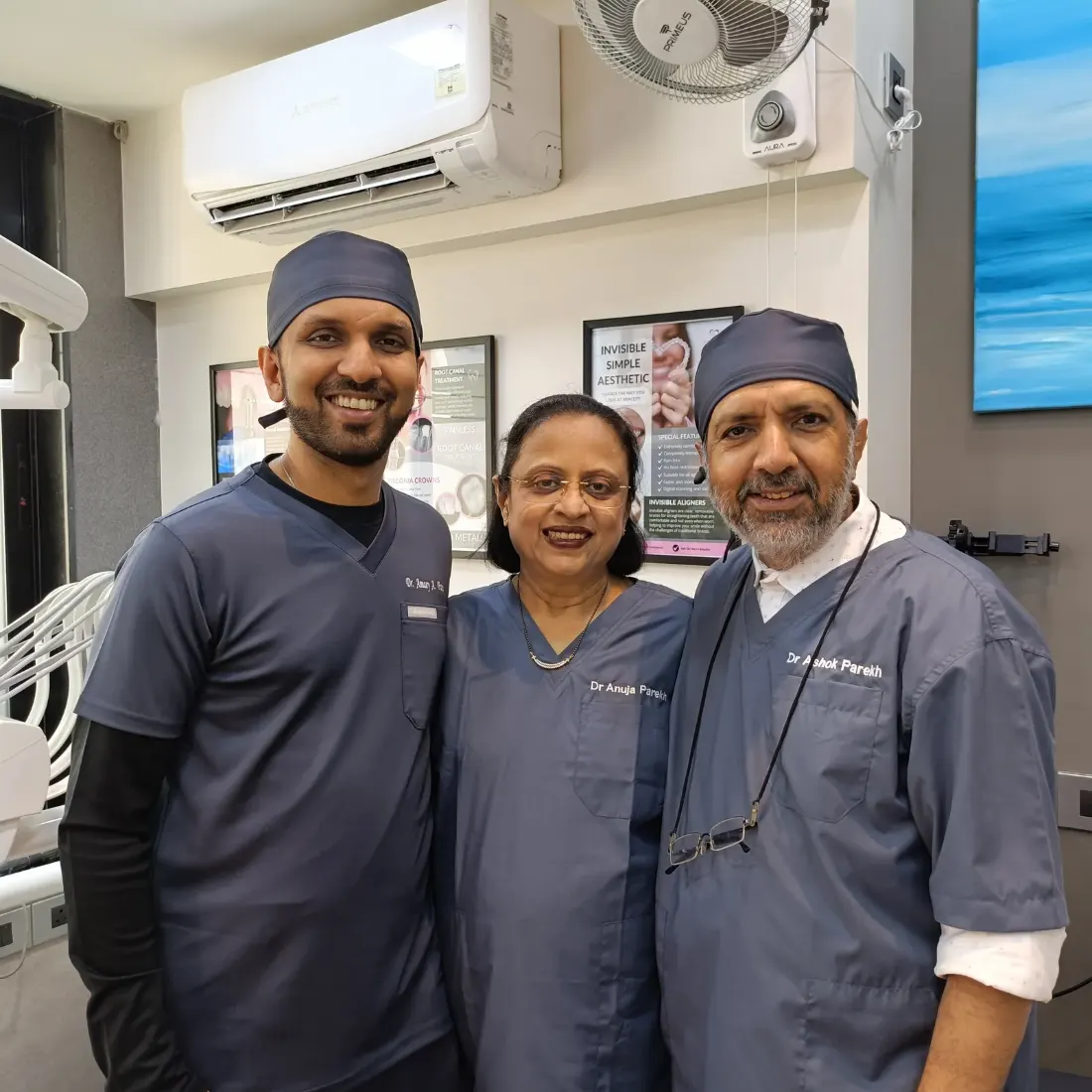
Dr. Amaey Parekh, an MDS prosthodontist, is trained in TMJ care and occlusal splint therapy. The cost of a splint or bite treatment depends on what the assessment finds and is written down before anything is made.
What you can do now
- Eat softer food for a few days during a flare-up
- Avoid chewing gum and very wide yawns
- Use a warm compress on the sore muscles
- Notice when you clench during the day, and let the teeth part
When to see a dentist
See a dentist if the jaw locks, if pain lasts more than a couple of weeks, or if you are waking with headaches or a sore jaw.
Read more about TMJ and jaw pain treatment at 3A, or see all prices on our treatment costs page.